


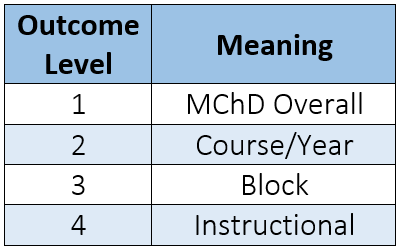
Level 3 Learning Outcomes – Block 2 (Cardiorespiratory and Renal)
Outcome 3.2.1: Discuss the anatomy, histology and some important pathologies associated with the cardiovascular, renal and respiratory systems and apply an understanding of these systems to simple clinical scenarios.
Outcome 3.2.2: Explain the mechanisms involved in generating and modulating the cardiac action potential, discuss how pacing of the heart muscle generates pressure, and evaluate and interpret common and simple electrocardiograms.
Outcome 3.2.3: Discuss the cardiac cycle, the determinants and regulators of cardiac output and venous return and summarise the determinants of pressure, flow and pulse in vascular beds;;interpret the nervous regulation of the circulation and control of blood pressure.
Outcome 3.2.4: Explain glomerular filtration and tubular re-absorption, the regulation of sodium and fluid balance, recognising the key differences in mechanisms involved in sodium and potassium homeostasis;; summarise the renal contribution to the maintenance of acid-base balance.
Outcome 3.2.5: Explain the physical principles of pulmonary ventilation and perfusion, and discuss how these affect gaseous exchange.
Outcome 3.2.6: Discuss the regulation of respiration and distinguish the roles of the respiratory and renal systems in the control of the acid-base base balance.
Outcome 3.2.7: Define pha rmacogenetic principles, relate these to the mechanisms of drug action, and differentiate the classes of cardiac, respiratory and renal drugs.
Outcome 3.2.8: Describe common respiratory viruses, the commensal microflora, and endogenous encapsulated bacterial pathogens of the respiratory tract.
Outcome 3.2.9: Discuss how lymphocyte signalling regulates cellular activation and differentiation, and how lymphocyte differentiation contributes to certain types of inflammation.
Outcome 3.2.10: Obtain a history from patients whose presenting complaint(s) suggest(s) disorder of the cardiovascular, renal and/or respiratory systems to elucidate the cause of the illness and its impact on well-being and define the biological, social and psychological context of management;; demonstrate system specific physical signs and interpret them in physiological and pathological terms, and define the role of clinical pathology, clinical physiology and imaging investigations in the care of such patients.
Outcome 3.2.11: Describe the impact of medicine on the interaction between the embodied self and the social world.
Outcome 3.2.12: Describe how culture, society, socio-economic and environmental influences interact with biological factors to determine health and wellbeing.
Outcome 3.2.13: Discuss the core ethical legal and human rights concepts including patient autonomy and self-determination, confidentiality, consent to the nature of a procedure and informed consent to its subjective and objective material risks, distributive and social justice including issues surrounding equitable access to quality medical services, and apply these to clinical scenarios, such as abortion, withdrawal and withholding treatment, consent from minors, indigenous patients, palliative care, organ transplantation and emergency care
Outcome 3.2.14: Discuss the importance of ethics, law and human rights in medical research.
Outcome 3.2.15: Explain the role of ethical practice and regulation in the prescription and administration of medication.
Outcome 3.2.16: Explain how errors and adverse events occur in hospitals and discuss the role of clinical governance systems to mitigate against harm.
Outcome 3.2.17: Explain, interpret and discuss multifactorial causation of disease, and interpret epidemiological data to understand the burden and risk factors for major cardiac diseases.
Outcome 3.2.18: Further develop clinical reasoning skills in Problem Based Learning practical sessions through the integration of information from lectures, Laboratory-based practicals and clinical skills tutorials, and consideration of population health and social aspects of disorders of the cardiovascular, renal and respiratory systems.